Enfield Lock History
The History of Enfield Lock
A Legacy Shaped by Industry, Innovation, and Community
Enfield Lock is one of North London’s most historically significant communities, with a heritage that spans centuries. Situated along the River Lee Navigation in the London Borough of Enfield, the area has long been connected to trade, transport, engineering, and innovation. From its early days as a rural settlement to its transformation into an internationally recognised centre of manufacturing, Enfield Lock has played an important role in both local and national history.
Early Beginnings
Before the growth of industry, Enfield Lock was a quiet rural area surrounded by farmland, rivers, and open countryside. The River Lee served as an important natural route for transportation, trade, and agriculture, connecting local communities with London and the surrounding counties.
The construction of the Lee Navigation in the 18th century improved the movement of goods and helped lay the foundation for the area’s future industrial development. The canal became a vital transport link, supporting businesses and encouraging economic growth throughout the region.
The Royal Small Arms Factory
The defining chapter in Enfield Lock’s history began in the early 19th century with the establishment of the Royal Small Arms Factory (RSAF). Founded in 1816, the factory became one of Britain’s most important industrial sites, producing firearms for the British Armed Forces and setting new standards in manufacturing and engineering.
The factory gained international recognition for its use of advanced production techniques, including interchangeable parts and precision engineering, making it one of the pioneers of modern manufacturing.
One of its most famous products was the Lee-Enfield rifle, which became the standard service rifle of the British Army for many decades and was used around the world during major conflicts.

A Community Built Around Industry
As the Royal Small Arms Factory expanded, Enfield Lock grew into a thriving industrial community. Workers and their families settled in the area, leading to the development of homes, schools, churches, shops, and other essential services.
The factory not only provided employment but also shaped the social and economic life of the community. Generations of local families worked at the site, creating a strong sense of identity and pride that remains part of Enfield Lock’s character today.
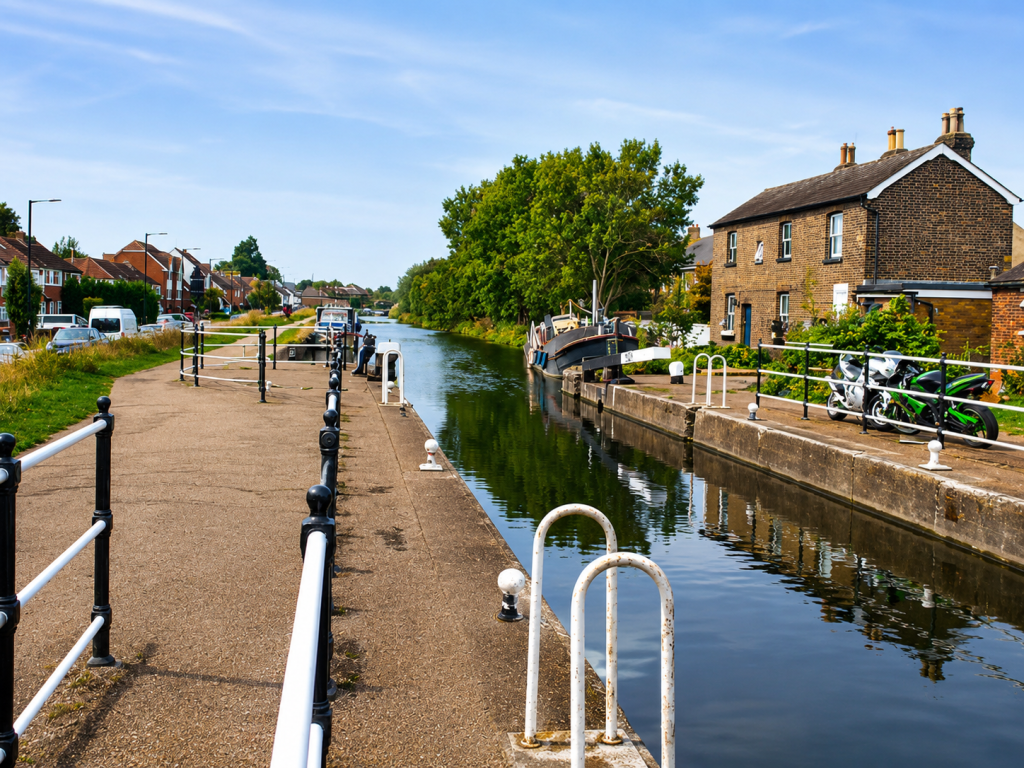
Enfield Lock Today
Although the Royal Small Arms Factory eventually closed, its legacy continues to shape Enfield Lock. Many historic buildings have been preserved and adapted for new uses, while modern residential developments, including Enfield Island Village, have brought new life to the area.
Today, Enfield Lock is a diverse and welcoming community that blends its rich industrial heritage with attractive green spaces, riverside walks, local businesses, schools, and community organisations. Residents and visitors alike can still discover reminders of the area’s remarkable past while enjoying everything the modern community has to offer.